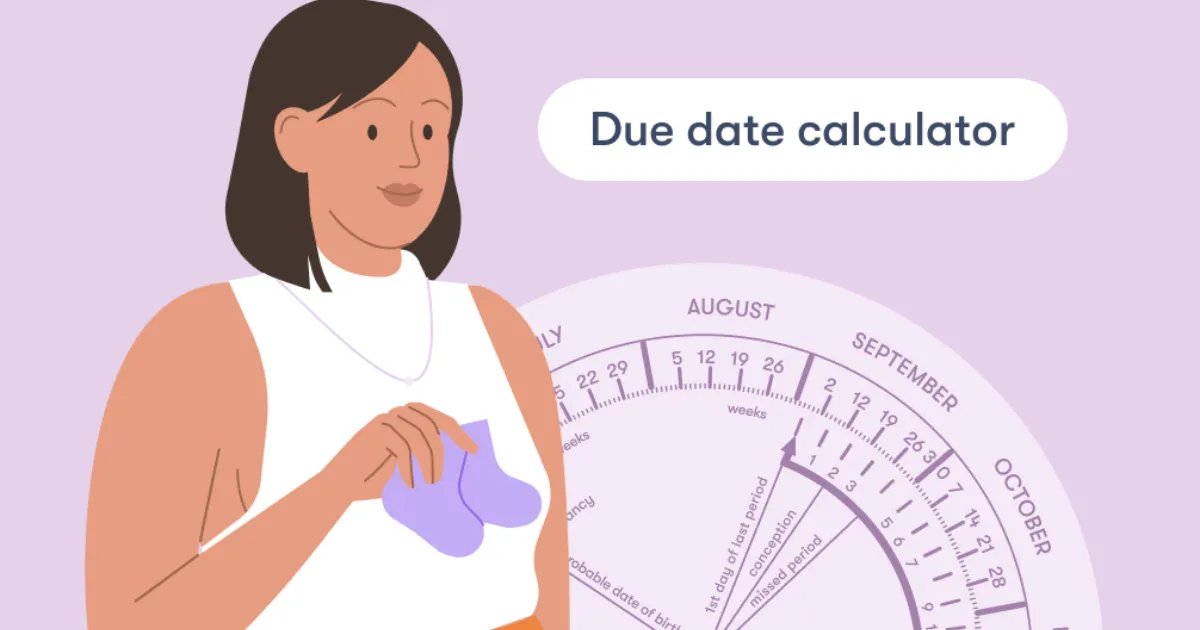
So, you just saw those two life-changing lines on a test? First off, huge congratulations! Once the initial “oh-my-gosh” moment settles, the very next question is almost always: “When do I get to meet my baby?” While the human body doesn’t strictly follow a calendar, a Pregnancy Due Date Calculator is your first essential tool for turning that mystery into a plan. Most parents-to-be feel a mix of excitement and overwhelm, wondering how to track milestones or when to schedule that first doctor’s visit. This guide is designed to take the guesswork out of the equation. We’ll dive into how these calculations work, why your “weeks” might feel a little confusing at first, and how you can use this information to prepare for your new arrival.
What is a Pregnancy Due Date Calculator and Why it Matters
A Pregnancy Due Date Calculator is a digital tool used to estimate your Estimated Date of Delivery (EDD). While only about 4% to 5% of babies are actually born exactly on their due date, having an EDD is crucial for several clinical and personal reasons.
Why Precision Counts
-
Medical Milestone Tracking: Doctors use your due date to ensure the baby is hitting growth targets at the right time.
-
Healthcare Scheduling: Important screenings, like anatomy scans and glucose tests, must happen within specific weekly windows.
-
Personal Preparation: From decorating the nursery to applying for parental leave, having a target month helps you organize your life before the “sleep-deprived” phase begins.
Understanding your due date isn’t just about the birth; it’s about the 40-week roadmap of pregnancy. Since a typical pregnancy is measured from the first day of your last period (not the day you conceived), the calculator helps bridge the gap between biological timing and the calendar year.
Step-by-Step Guide: How to Calculate Your Due Date
Calculating your due date is relatively straightforward if you have the right data. Here is how to use a calculator or do the math yourself:
- Identify Your LMP: Find the date of the first day of your Last Menstrual Period (LMP). This is the gold standard for most calculators.
- Determine Cycle Length: If your menstrual cycle is longer or shorter than the average 28 days, adjust the calculation. Most tools allow you to input your average cycle length for better accuracy.
- Input the Data: Enter your LMP into the calculator tool.
- Adjust for Conception (Optional): If you happened to be tracking ovulation and know the exact date of conception, some advanced tools allow you to use this for a more “biological” estimate.
- Review Your Results: The tool will provide your EDD and usually tell you how many weeks and days pregnant you are currently.
Confirm with Ultrasound: Use the calculated date as a “placeholder” until your first-trimester dating ultrasound, which is the most accurate way to confirm the date.
The Math Behind It: Naegele’s Rule
Most Pregnancy Due Date Calculators rely on a formula known as Naegele’s Rule. It sounds technical, but it’s actually a simple piece of arithmetic based on the assumption that a human pregnancy lasts approximately 280 days (40 weeks) from the start of the last period.
The standard formula is:
For example, if your last period started on May 1st, 2025:
-
Add 7 days: May 8th.
-
Subtract 3 months: February 8th.
-
Add 1 year (if applicable): February 8th, 2026.
The Science of “40 Weeks”
It might seem strange to count the two weeks before you were actually pregnant (the time between your period and ovulation), but because most women don’t know the exact moment of conception, the LMP provides a fixed, reliable starting point for medical professionals worldwide.
Real-Life Scenarios
How does this look in practice? Let’s look at a few common situations:
Scenario A: The Regular Cycle
Sarah has a consistent 28-day cycle. Her last period began on January 1st. Using the calculator, her due date is set for October 8th. Because her cycle is “textbook,” her doctor likely won’t change this date unless the ultrasound shows a significant size difference.
Scenario B: The Long Cycle
Jasmine has a 35-day cycle. If she uses a standard calculator, it might tell her she is due sooner than she actually is. Because she ovulates later than average, her “biological” due date would be roughly one week later than the standard LMP calculation suggests.
Scenario C: IVF Pregnancy
For those using In Vitro Fertilization, the “LMP” is irrelevant. Instead, the calculator uses the date of the embryo transfer. If it was a 5-day blastocyst transfer, the math is adjusted to account for the exact age of the embryo.
FAQs: Frequently Asked Questions
1. How accurate is a due date calculator?
It is a very high-quality estimate, but not a guarantee. It assumes a 28-day cycle and that ovulation occurred on day 14. Since every woman’s body is different, your doctor will likely use a “dating scan” (ultrasound) in the first trimester to confirm the date.
2. Can my due date change during pregnancy?
Yes. If an early ultrasound shows the baby is significantly larger or smaller than the LMP suggests, your OB-GYN might “correct” your due date to reflect the ultrasound findings, as these are more accurate in the first 12 weeks.
3. What if I don’t know the date of my last period?
Don’t panic! This is very common. In this case, your healthcare provider will rely entirely on an ultrasound to measure the crown-rump length (CRL) of the embryo to determine how far along you are.
Conclusion & CTA
Finding out your due date is the first step in a beautiful, transformative journey. While the Pregnancy Due Date Calculator gives you a target to aim for, remember that your baby will arrive when they are ready. Use this date to start your countdown, plan your appointments, and begin the exciting process of preparing for your little one.
Ready to find out your big day? Use our Pregnancy Due Date Calculator now and start planning for your 2026 arrival!
Leave a Reply