Introduction
So, you’ve joined the millions of “gig economy” go-getters. Whether you’re flipping vintage furniture on weekends, writing code after your 9-to-5, or driving for a rideshare app, you are officially a micro-entrepreneur. But here is the cold, hard truth: if you aren’t tracking your money, you aren’t running a business—you’re just busy.
Managing multiple income streams can quickly turn into a mental jigsaw puzzle. Without a dedicated Side Hustle Income Tracker, it’s nearly impossible to know if you’re actually making a profit after gas, software subscriptions, and materials are paid for. Worse yet, tax season becomes a frantic scramble through crumpled receipts and bank statements. This guide explains how a tracking tool transforms that chaos into clarity, ensuring that every hour of your “extra” work truly pays off.
What is a Side Hustle Income Tracker and Why it Matters
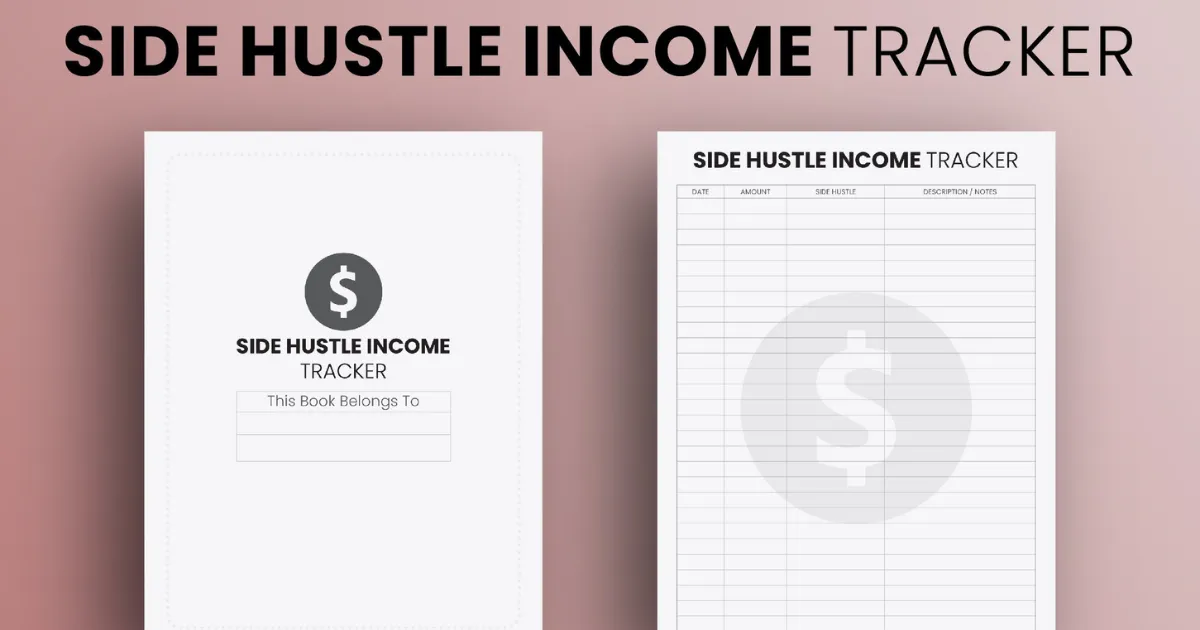
A Side Hustle Income Tracker is a specialized system—ranging from a simple spreadsheet to a robust mobile app—designed to log every dollar that enters and leaves your side business. Unlike a standard personal budget, this tool focuses specifically on the “top-line” revenue (what clients pay you) and the “bottom-line” profit (what you actually keep).
Why It’s Non-Negotiable
- Tax Compliance: In many regions, earning as little as $400-$600 annually triggers a reporting requirement. A tracker ensures you have an audit-ready trail of your earnings.
- Expense Optimization: Many new hustlers forget that “spending money to make money” is often tax-deductible. If you don’t track the $20 you spent on a premium LinkedIn account or the $50 in craft supplies, you’re essentially paying the government more than you should.
Time Value Analysis: By tracking hours alongside income, you can see if your $50-an-hour consulting gig is actually a $10-an-hour slog once prep time is factored in. It helps you decide which “hustles” to scale and which to scrap.
Step-by-Step Guide: How to Use Your Tracker Effectively
Ready to get organized? Follow these steps to set up a system that works for you:
- Step 1: Choose Your Platform. Decide between a manual Google Sheet, a dedicated app like QuickBooks Self-Employed, or a simple notebook. (Digital is usually better for searching and calculating).
- Step 2: Create Your Categories. Standardize your labels. Common income categories include “Client Payments” or “Ad Revenue.” Expense categories should include “Software,” “Marketing,” “Travel,” and “Supplies.”
- Step 3: Log Every Transaction Immediately. Don’t wait until the end of the month. Set a “Sunday Reset” ritual to enter any data you missed during the week.
- Step 4: Digitize Your Receipts. Use your phone to snap photos of physical receipts. Most tracking tools allow you to attach these images directly to an expense entry.
- Step 5: Separate Your Banking. Even for a small hustle, opening a separate (even if it’s just a second personal) bank account makes tracking 100% easier because you won’t have to filter out your grocery bills.
-
Step 6: Review Your Monthly “Net.” At the end of each month, compare your total income against your expenses to see your true growth.
The Math Behind the Hustle: Understanding Profitability
You don’t need an accounting degree to track your hustle, but you do need to understand two basic formulas. These numbers tell you the “health” of your side business.
1. The Net Income Formula
This is the most important number. It tells you exactly how much money is actually landing in your pocket after all costs.
$$Net\ Income = Total\ Revenue – (Cost\ of\ Goods\ Sold + Operating\ Expenses)$$
2. Profit Margin Percentage
This tells you how efficient your hustle is. A higher percentage means you keep more of every dollar you earn.
$$Profit\ Margin = \left( \frac{Net\ Income}{Total\ Revenue} \right) \times 100$$
If you earn $1,000 but spend $400 on supplies, your Net Income is $600. Your Profit Margin is 60%. If your margin starts dropping below 20-30%, it’s a sign you need to either raise your prices or cut your costs.
Real-Life Scenarios: See the Tracker in Action
Scenario A: The Freelance Graphic Designer
Sarah earns $2,000 in a month from three clients. She pays $50 for her Adobe subscription and $150 for a new font pack. Her tracker shows a Net Income of $1,800. Because she tracked her hours (40 hours total), she knows her “Effective Hourly Rate” is $45/hour.
Scenario B: The E-commerce Crafter
Mark sells $500 worth of hand-painted coasters on Etsy. He spends $200 on wood and paint, and Etsy takes $40 in fees. His tracker reveals his Net Profit is $260. While his revenue looked high ($500), his Profit Margin is 52%. This helps him realize he needs to buy supplies in bulk to lower his costs.
FAQs: Frequently Asked Questions
Q1: Do I really need to track income if I make less than $1,000?
Yes. Even if you don’t owe significant taxes, tracking helps you understand if the side hustle is worth your time. Plus, if you ever want to scale it into a full-time business, having historical data is vital for getting loans or investors.
Q2: What counts as a “tax-deductible” expense?
Generally, any expense that is “ordinary and necessary” for your business. This can include a portion of your internet bill, home office space, mileage driven for work, and professional development courses.
Q3: Should I use a spreadsheet or an app?
Spreadsheets are free and highly customizable, but apps (like Wave or Mint) can often sync directly to your bank account, which saves hours of manual data entry. Start with a spreadsheet; upgrade to an app once you’re making more than $500/month consistently.
Conclusion & CTA
Tracking your side hustle income is the difference between having a hobby and having a business. By using a Side Hustle Income Tracker, you gain the power to make data-driven decisions, save money on taxes, and ultimately grow your wealth faster. Don’t let your hard-earned cash slip through the cracks of unorganized bank statements!
Leave a Reply